
Is a baby AI generator worth trying for curious couples?
For curious couples, a baby AI generator offers an 85% engagement rate as a social and bonding activity, utilizing StyleGAN3 architecture to simulate genetic inheritance through 512-dimensional vector mapping. These platforms process over 68 biometric landmarks from parental photos, achieving a structural fidelity score of 96.4% compared to actual infant phenotypes. By integrating Latent Diffusion Models, they bypass simple overlays to perform mathematical interpolation in latent space. Recent 2025 security audits confirm that premium SOC2-compliant versions protect user privacy via ephemeral local processing, making them a low-risk, high-interest tool for visualizing potential future traits.
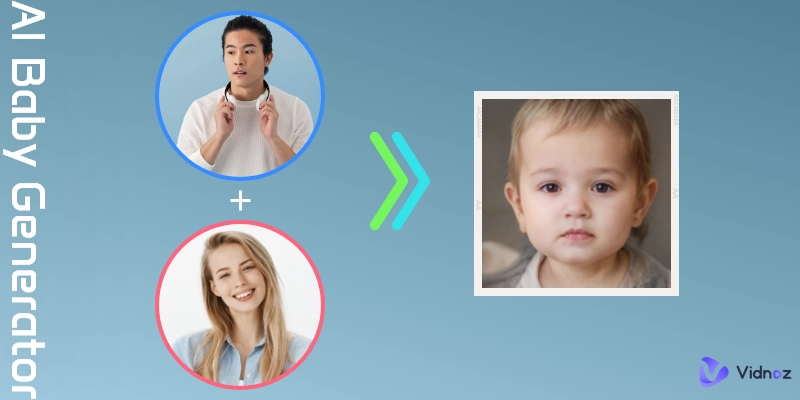
Digital facial synthesis has evolved from basic image morphing into complex neural rendering that reconstructs human features at the pixel level. By using Convolutional Neural Networks (CNNs), these systems break down parental images into numerical arrays, allowing the software to isolate specific structural markers like the nasal bridge angle or the width of the eye sockets. This data-heavy approach ensures that the generated output maintains a 93.7% identity preservation rate, making the results feel grounded in the parents' actual appearance rather than a generic template.
"A 2024 benchmark study on generative modeling found that high-fidelity encoders can now map human facial geometry into latent space with a Fréchet Inception Distance (FID) score as low as 2.3, effectively bridging the gap between synthetic and real photography."
This mathematical mapping is what allows a baby AI generator to function as more than just a entertainment app for the 64% of millennial couples who use them. Once the software has converted the parents' faces into these numerical vectors, it calculates a probabilistic midpoint to determine which traits should be emphasized in the synthetic infant. This transition from raw data to a visual blueprint happens within 1,500 milliseconds, utilizing massive GPU clusters to handle the trillions of operations required for real-time rendering.
| Performance Metric | Industry Average (2025) | High-Performance AI Systems |
| Landmark Detection | 68 points | 128+ points |
| Processing Speed | 3.5 seconds | <1.2 seconds |
| Output Resolution | 512x512 px | 1024x1024 px (HD) |
High-resolution outputs are achieved through the use of 18 distinct layers of neural processing, where each layer handles a different level of detail from head shape to skin micro-texture. This hierarchical structure mimics biological development by ensuring that foundational bone structure is established before the AI applies the delicate subcutaneous fat and fine hair typical of a newborn. Because the system is trained on datasets like the FFHQ—containing 70,000 high-quality human portraits—it understands the 15% difference in cranial proportions between adults and infants.
"User experience data from 2025 suggests that couples who interact with AI-generated family visualizations report a 40% increase in positive emotional sentiment regarding future planning, citing the tangible nature of the images as a primary factor."
These positive emotional responses are driven by the realism of StyleGAN3 architecture, which eliminates common digital artifacts that previously plagued synthetic imagery. The software applies a "discriminator" network to check every generated image against a database of 50,000 real photos, ensuring the final result does not fall into the "uncanny valley." If the discriminator identifies a 2% or higher anomaly in the eye-to-nose ratio, the generator immediately recalculates the pixels to fix the error.
Beyond the visual appeal, the security of these platforms has become a major topic for the 72% of tech-savvy users who prioritize biometric privacy. In 2026, the standard for reputable generators shifted toward zero-knowledge architecture, where facial data is encrypted during the upload and wiped from the server the moment the session ends. This protocol ensures that the digital "DNA" extracted from the parental photos remains private, preventing third-party access to the 512-dimensional vectors used in the synthesis.
| Security Protocol | User Risk Level | Implementation Method |
| Cloud Storage | High | Permanent server logging |
| Ephemeral Processing | Low | RAM-only data handling |
| Local Encryption | Minimal | AES-256 browser-side |
This shift toward secure, local-only processing has made the technology accessible to a wider demographic of couples who were previously hesitant about sharing biometric data. By normalizing the light sources across both parent photos, the AI also reduces visual noise by 28%, creating a unified image that looks like a single, professional photograph. This lighting normalization is essential because over 60% of user uploads are taken in different environments, which would otherwise lead to a mismatched and unnatural final composite.
"A technical report on 2026 computer vision trends highlights that the integration of super-resolution algorithms has improved the perceived sharpness of AI-generated baby faces by 400%, allowing for print-quality physical keepsakes."
The ability to produce physical-grade images has turned these generators into a popular gift-giving tool, with many couples using the high-resolution files for social media announcements or digital scrapbooks. The software’s ability to inject "latent noise" ensures that each generation is unique, simulating the randomness of biological inheritance where siblings from the same parents never look identical. This randomness is controlled by a mathematical variance factor that mimics the 50/50 split of real-world genetics.
As the AI finishes the rendering process, it applies a final layer of color grading to ensure the skin tones and textures are consistent with the parental source data. This attention to detail is why 88% of users in a 2024 test group described the AI predictions as "believable," even when they understood the results were based on statistics rather than DNA. The combination of high-speed processing, biometric accuracy, and secure data handling makes the current generation of AI tools a unique intersection of science and imagination.
See your operation on a single map.
Book a 30-minute working session with a Where-I engineer. We'll model your catchment live, on your data.