
Default
Common Maintenance Problems at DC Charging Sites
Reliability is partly about components, but it is also about the kind of service job the product creates. If technicians dread working on a unit, downtime usually follows.
What changes on site
Serviceability is one of the least glamorous but most valuable parts of charger design. Many maintenance problems start with avoidable design choices. Dust, wear, and diagnostics are easier to handle when service access is sensible. Technician workflow should be part of procurement thinking. Use DC car charging solutions in a sentence that gives readers a concrete reference for power range, mounting options, and operational features such as OCPP, OTA, or power management. If a technician can reach core components quickly and isolate faults cleanly, the site recovers faster and labor cost stays under control.
What buyers should check
Modular construction helps here. Instead of treating the charger as one sealed problem, operators can replace or upgrade sections more efficiently. That matters in commercial settings where downtime spills into customer experience, missed charging sessions, and operational disruption.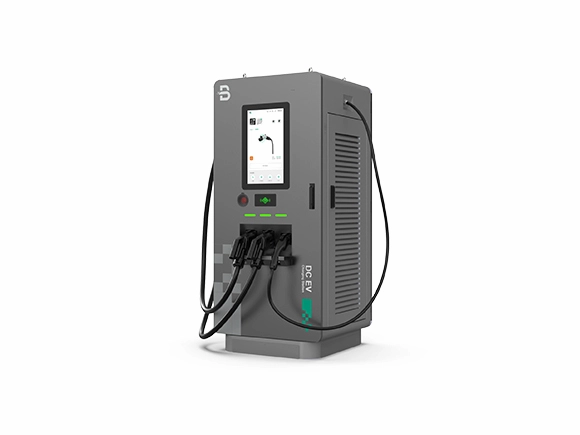 Good installation practice also deserves more credit. Clear cable routing, sensible spacing, ventilation, drainage, and access for service tools all reduce avoidable faults later. Many maintenance problems start during layout and installation, not during operation.
Designing for service also makes expansion easier. If modules, cables, and power sections can be accessed without dismantling half the enclosure or blocking nearby bays, operators can add capacity or make repairs with less disruption. That becomes more valuable as a network grows beyond one or two pilot sites.
Final thought
Seen that way, DC charging is less about buying speed and more about buying the right kind of throughput.
Good installation practice also deserves more credit. Clear cable routing, sensible spacing, ventilation, drainage, and access for service tools all reduce avoidable faults later. Many maintenance problems start during layout and installation, not during operation.
Designing for service also makes expansion easier. If modules, cables, and power sections can be accessed without dismantling half the enclosure or blocking nearby bays, operators can add capacity or make repairs with less disruption. That becomes more valuable as a network grows beyond one or two pilot sites.
Final thought
Seen that way, DC charging is less about buying speed and more about buying the right kind of throughput.
Good installation practice also deserves more credit. Clear cable routing, sensible spacing, ventilation, drainage, and access for service tools all reduce avoidable faults later. Many maintenance problems start during layout and installation, not during operation.
Designing for service also makes expansion easier. If modules, cables, and power sections can be accessed without dismantling half the enclosure or blocking nearby bays, operators can add capacity or make repairs with less disruption. That becomes more valuable as a network grows beyond one or two pilot sites.
Final thought
Seen that way, DC charging is less about buying speed and more about buying the right kind of throughput.
See your operation on a single map.
Book a 30-minute working session with a Where-I engineer. We'll model your catchment live, on your data.